
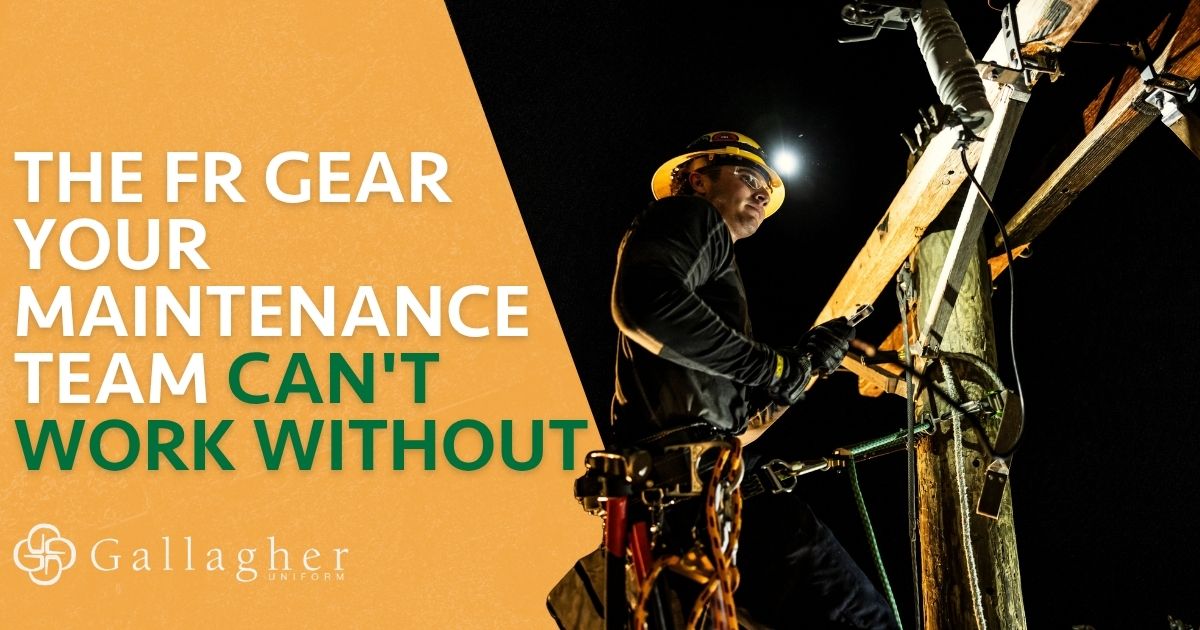
The FR Gear Maintenance Teams Need When Working Around Live Electrical Equipment
Your maintenance team isn't made up of electricians. But chances are, they're opening panels, testing circuits, and working near live equipment on a regular basis.
According to ESFI, 74% of workplace electrical fatalities between 2011 and 2023 occurred in non-electrical occupations. Maintenance workers are in that group.
If your team's maintenance uniforms aren't built for that exposure, this guide will help you fix that.
It's Not Just an Electrician Problem
Under NFPA 70E, electrical safety requirements are task-based, not title-based. It doesn't matter what the badge says. If the work involves energized equipment, it carries arc flash risk.
This applies to more roles than most facilities realize:
- Maintenance techs who open panels to troubleshoot equipment
- Mechanics working near electrical systems as part of routine service
- Facility technicians who reset breakers, test circuits, or work near switchgear
Standard industrial workwear isn't flame-resistant by default. Poly-cotton blends can ignite and keep burning. That's the gap a proper maintenance worker uniform program needs to close.
FR and Arc-Rated: What's the Difference?
These terms get used interchangeably, but they're not the same thing.
- FR (flame-resistant) clothing self-extinguishes and won't melt onto skin. It covers flash fire and general thermal hazards.
- Arc-rated (AR) clothing is FR clothing that's also been tested specifically for arc flash exposure. It carries a cal/cm² rating on the label.
- All arc-rated clothing is FR. Not all FR clothing is arc-rated.
For maintenance teams working around live electrical equipment, arc-rated gear is what the task calls for. Check garment labels for NFPA 70E or ASTM F1506 compliance and a cal/cm² value. If those aren't on the label, the garment isn't providing arc flash protection.
Need a deeper breakdown? We covered this in detail in our FR and arc flash guide.
The FR Gear Your Maintenance Team Should Have
Here's what a solid FR maintenance uniform program looks like, from the ground up.
FR Work Shirts
Long-sleeve FR shirts rated to NFPA 70E Category 1 (4 cal/cm²) are the starting point for anyone working near live equipment. Breathable FR-treated cotton or inherent FR blends work well for all-day wear.
FR Work Pants
Shirts and pants work as a system. An arc-rated shirt over standard work pants still leaves a worker exposed. FR industrial pants with reinforced knees complete the coverage.
FR Coveralls
For mechanics or maintenance techs doing higher-contact work, FR coveralls provide full-body coverage in one garment. Especially practical when workers cross between mechanical and electrical tasks throughout the day.
Arc-Rated Face Protection
A face shield and balaclava are required at Category 2 and above. This is the piece most commonly missing from maintenance teams that otherwise have the right shirts and pants.
Insulated Gloves
Rubber insulating gloves with leather protectors are required when working near energized conductors. Gloves are voltage-rated separately from arc flash categories, so match the class to the voltage your team works around.
FR Outerwear
For Michigan and Northern Indiana winters, FR jackets and vests keep teams protected when moving between indoor and outdoor areas. Standard lined jackets worn over FR shirts can compromise arc protection, so purpose-built FR outerwear is worth it.
Matching Gear to the Task
Most maintenance teams fall into NFPA 70E Categories 1 and 2. Here's a quick reference:
| Common Task | ||
|---|---|---|
| Operating enclosed breakers, voltage testing below 240V | Cat 1 (4 cal/cm²) | AR shirt and pants, face shield, hard hat, leather gloves |
| Removing MCC covers, disconnect operations, 480V equipment | Cat 2 (8 cal/cm²) | AR shirt and pants, arc flash hood with balaclava, hard hat, insulated gloves |
| Racking breakers, switchgear work at 480V and above | Cat 3-4 (25-40 cal/cm²) | Multi-layer arc flash suit with hood, arc-rated gloves, full coverage |
If your equipment already has arc flash labels, those labels tell you exactly what category is required. That's your starting point.
FR Gear Only Works If It's Maintained Correctly
Buying the right garments is half the job. The other half is keeping them compliant.
A few things that degrade FR protection over time:
- Washing with bleach, fabric softeners, or starch
- Oil and grease contamination, which can create ignition risk
- Tears, charring, or worn-through areas that go unrepaired
- Home laundering without following manufacturer care instructions
Professional industrial laundering removes heavy soil while preserving garment ratings. Regular inspection before each delivery catches damage before a compromised garment goes back into rotation.
A Smarter Way to Manage FR Maintenance Uniforms
Managing FR gear in-house takes more time than most teams expect. Buying, tracking, laundering, inspecting, and replacing garments all fall on someone's plate.
A full-service industrial uniform rental program handles all of it, our FR program includes:
- Garments from trusted manufacturers like Bulwark, meeting NFPA 70E and NFPA 2112 standards
- Industrial laundering in our Clean Green Certified facility
- A three-point inspection process before every delivery
- Automatic repairs and replacements
- Full garment tracking with RFID and G-Trak
- A dedicated Route Service Representative, same person, every week
You're not working with a national call center. You're working with a local team that knows your facility and takes ownership of your program.
Let's Make Sure Your Team Has the Right Gear
A maintenance worker who opens a panel every day deserves the same protection as the electrician who comes in for a scheduled job.
We've been helping industrial and maintenance teams across Michigan and Northern Indiana get this right for over 130 years. Whether you're building an FR program from scratch or improving what you have, we'll make it simple.
Frequently Asked Questions
Do mechanics and maintenance workers need FR clothing?
It depends on the tasks they perform, not their job title. If your team opens energized panels, troubleshoots live equipment, or works near switchgear, NFPA 70E requirements apply. FR and arc-rated maintenance uniforms are the right protection for those tasks.
What is the difference between Category 1 and Category 2 arc flash protection?
Category 1 (4 cal/cm²) covers lower-voltage tasks like operating enclosed breakers. Category 2 (8 cal/cm²) applies to higher-exposure tasks like working on 480V motor control centers. Many facilities standardize on Category 2 since it covers both levels and comfort is comparable.
Can FR uniforms be washed at home?
Home laundering is possible but risky. Bleach, fabric softeners, and starch can degrade FR properties over time. Industrial laundering, included in a Gallagher rental program, is designed to protect garment ratings and extend garment life.
 SafeUnsubscribe® link, found at the bottom of every email.